The Kimono and the Spirituality of Shintoism
When people think of Kyoto, two images often come to mind: serene Shinto shrines surrounded by nature and the graceful beauty of kimono-clad visitors walking through history-rich streets. Beyond its elegance, the kimono has played a profound role in Japan's spiritual life—especially within the sacred practices of Shintoism, Japan's indigenous religion.
In this article, we will explore:
- The spiritual symbolism of the kimono in Shinto rituals.
- How clothing connects humans with the divine.
- The experience of visiting Kyoto's shrines in kimono.
- Practical tips on renting a kimono in Kyoto to immerse yourself in this tradition.
👉 Ready to experience it for yourself? Discover our kimono rental service here: Mimosa Kimono Rental in Kyoto

1. Understanding Shintoism: Japan's Native Spirituality
Shintoism is often described not as a strict religion but as a spiritual way of life. Its rituals focus on purity, harmony with nature, and respect for the kami—the divine spirits believed to inhabit trees, rivers, mountains, and even people.
Clothing, especially the kimono, is central to this practice. Wearing specific garments for shrine visits or rituals is not only about beauty—it is about purity and connection with the sacred world.
2. The Symbolism of the Kimono in Shinto Rituals
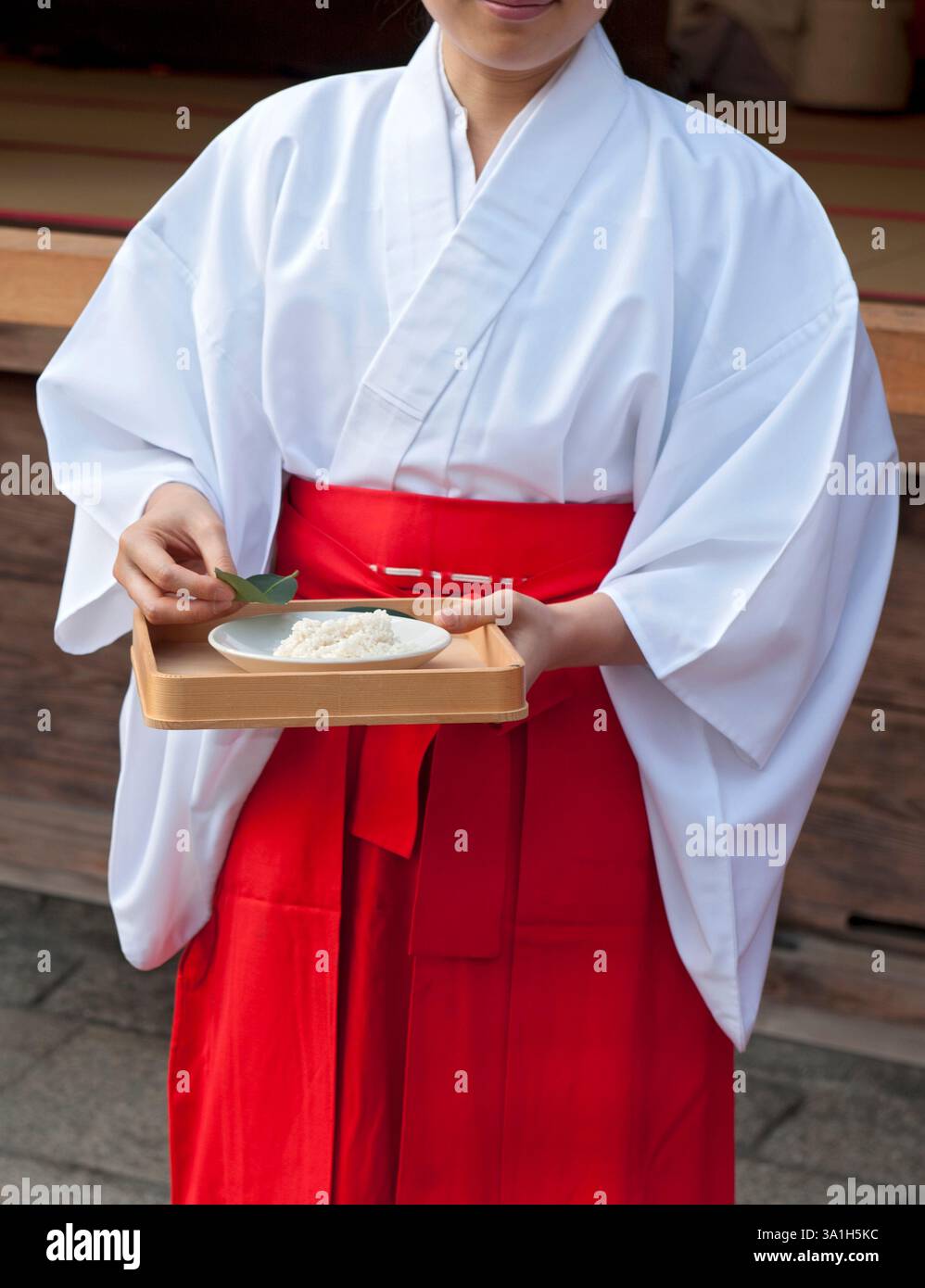
The kimono in Shinto practices symbolizes:
- Purity (清潔, seiketsu): White kimonos often used by shrine maidens (miko) represent cleanliness and spiritual clarity.
- Formality (格式, kakushiki): Formal kimono mark important occasions, showing respect to the kami.
- Continuity with tradition: By wearing traditional clothing, participants honor centuries of ritual continuity.
Shrine maidens wear the iconic white kimono with red hakama pants, while priests may use more elaborate robes with symbolic colors like purple, green, and gold.
3. Shinto Festivals in Kyoto Where Kimono Shines
Kyoto is home to some of Japan's most important Shinto festivals (matsuri). During these events, kimono becomes not just attire but a living connection to spirituality.
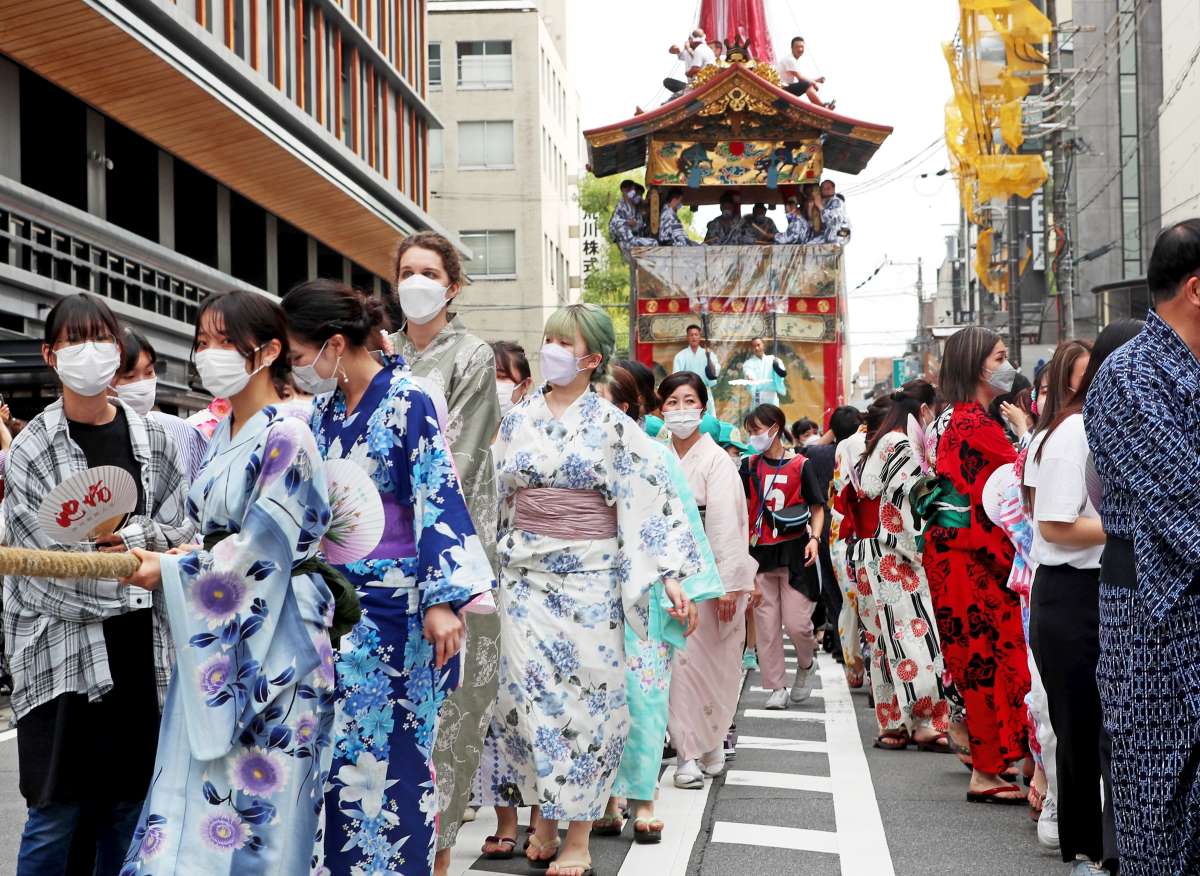
📍 Famous Festivals in Kyoto:
- Aoi Matsuri (May): Participants parade in Heian-style robes and kimonos, recreating ancient traditions.
- Gion Matsuri (July): Although famous for its floats, many locals and visitors wear yukata (a lighter summer kimono).
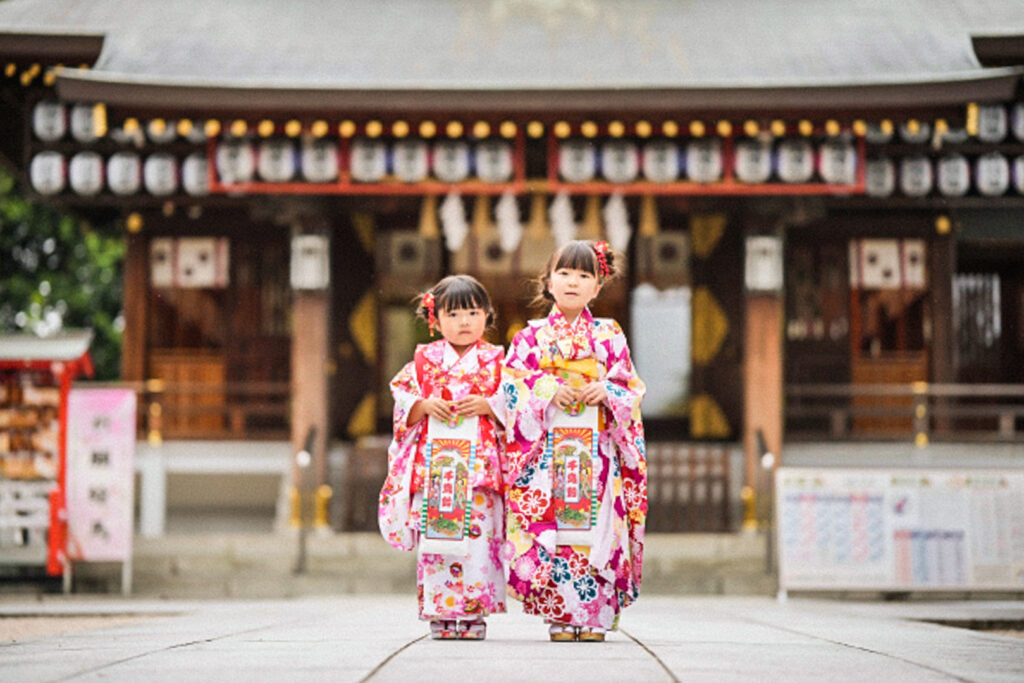
- Shichi-Go-San (November): Children aged 3, 5, and 7 visit shrines in colorful kimonos to pray for growth and protection.
Wearing a kimono during these festivals allows visitors to be part of Kyoto's living culture, not just an observer.
4. Visiting Kyoto Shrines in Kimono
Some of Kyoto's most beautiful shrines include:
- Fushimi Inari Taisha: Known for its thousands of red torii gates. Imagine walking through them in a kimono—it feels like stepping into another world.
- Yasaka Shrine: Located in Gion, where geishas and visitors often stroll in kimono.
- Shimogamo Shrine: One of Kyoto's oldest shrines, deeply tied to the Aoi Matsuri.

By renting a kimono in Kyoto, visitors not only enhance their photos but also align themselves with the sacred etiquette of shrine visits.
👉 Make your visit unforgettable: Rent your kimono in Kyoto here
5. The Spiritual Experience of Wearing Kimono
Why does wearing kimono feel so different?
- Mindfulness: The process of putting on a kimono slows you down, making you aware of each layer.
- Connection to tradition: You walk the same way people did hundreds of years ago.
- Spiritual respect: At shrines, being dressed in kimono shows reverence to the sacred space.
For many visitors, renting a kimono is not just about aesthetics—it is about stepping into the spirit of Japan itself.
6. Modern Meaning: Kimono Rental as a Spiritual Journey
While most modern Japanese people no longer wear kimono daily, in Kyoto the practice thrives thanks to kimono rental shops.
By renting, anyone—local or visitor—can connect with spirituality, tradition, and beauty. For example:
- Couples rent kimonos to feel the romance of old Kyoto.
- Tourists rent for shrine photos and cultural immersion.
- Some visitors rent specifically for Shinto weddings or ceremonies.
👉 If you want to live this experience, we welcome you at: Mimosa Kimono Rental Kyoto
7. Practical Tips for Renting Kimono in Kyoto

- Choose the right season: Light yukata in summer, warm kimono in winter.
- Pick colors carefully: White for purity, red for vitality, green for harmony with nature.
- Plan your shrine visit: Early mornings are less crowded, giving you a more spiritual experience.
8. External Connections: Learn More About Shintoism and Kimono
For further reading:
These resources will deepen your understanding and inspire your own visit.

9. Conclusion: Kimono as a Sacred Path in Kyoto
The kimono is more than just beautiful clothing—it is a bridge between humans and the divine in Shinto spirituality.
By wearing kimono at Kyoto's shrines, you:
- Honor tradition.
- Connect with spirituality.
- Create lasting memories of Japan's cultural soul.
🌸 Whether you come for festivals, rituals, or simply to feel the magic of Kyoto, renting a kimono transforms your experience into something unforgettable.
👉 Start your journey today: Book your kimono rental in Kyoto