Japan is a country where tradition and art have always walked hand in hand. Among the many cultural symbols that define Japanese aesthetics, the kimono holds a central place. While most visitors to Kyoto know the kimono as elegant clothing to rent and wear in temples, gardens, or tea ceremonies, its presence in Japanese painting is equally fascinating.

From the dazzling gold-leaf folding screens of the Momoyama period to the subtle brushstrokes of modern Nihonga, kimonos have been depicted not only as garments but as cultural metaphors—symbols of refinement, identity, and changing seasons.
In this article, we will explore how the kimono appears in Japanese painting, why Kyoto remains the perfect city to experience this tradition, and how you can bring history to life by renting and wearing a kimono today.
👉 If you want to rent a kimono in Kyoto and live this cultural experience, visit Mimosa Kimono Rental Kyoto.
Table of Contents
- Introduction: The Kimono as an Artistic Motif
- Kimonos in Folding Screens (Byōbu-e) and Emaki Scrolls
- The Kimono in Edo Period Ukiyo-e Prints
- Modern Nihonga and Contemporary Expressions
- Kyoto: The Living Museum of Kimono Culture
- Kimono Symbolism: Colors, Patterns, and Seasons
- Experiencing Kimono in Kyoto Today
- Conclusion: Wearing Art in Everyday Life
1. Introduction: The Kimono as an Artistic Motif
The kimono is more than clothing—it is a canvas of Japanese aesthetics. Every fold, every color, and every embroidered pattern tells a story. In painting, artists used the kimono to express not only fashion but also status, femininity, masculinity, and even spirituality.
In Kyoto, where traditional arts have been preserved for centuries, paintings often depicted aristocrats, samurai, and common townspeople dressed in exquisite robes. These visual records offer a window into the cultural soul of Japan.
2. Kimonos in Folding Screens (Byōbu-e) and Emaki Scrolls
During the Momoyama (late 16th century) and early Edo periods, folding screens decorated with gold leaf became prominent in Japanese castles and temples. Figures in these paintings frequently wore richly detailed kimonos that reflected wealth and sophistication.
- The golden background symbolized eternity and power.
- The kimono patterns—cherry blossoms, cranes, or flowing water—carried symbolic meanings about prosperity, longevity, or purity.
- Emaki (narrative scrolls) depicted court life, festivals, and legends, with kimonos carefully painted to show social hierarchy.
🎨 These artworks show how the kimono became not just fashion, but a visual code of meaning.

3. The Kimono in Edo Period Ukiyo-e Prints
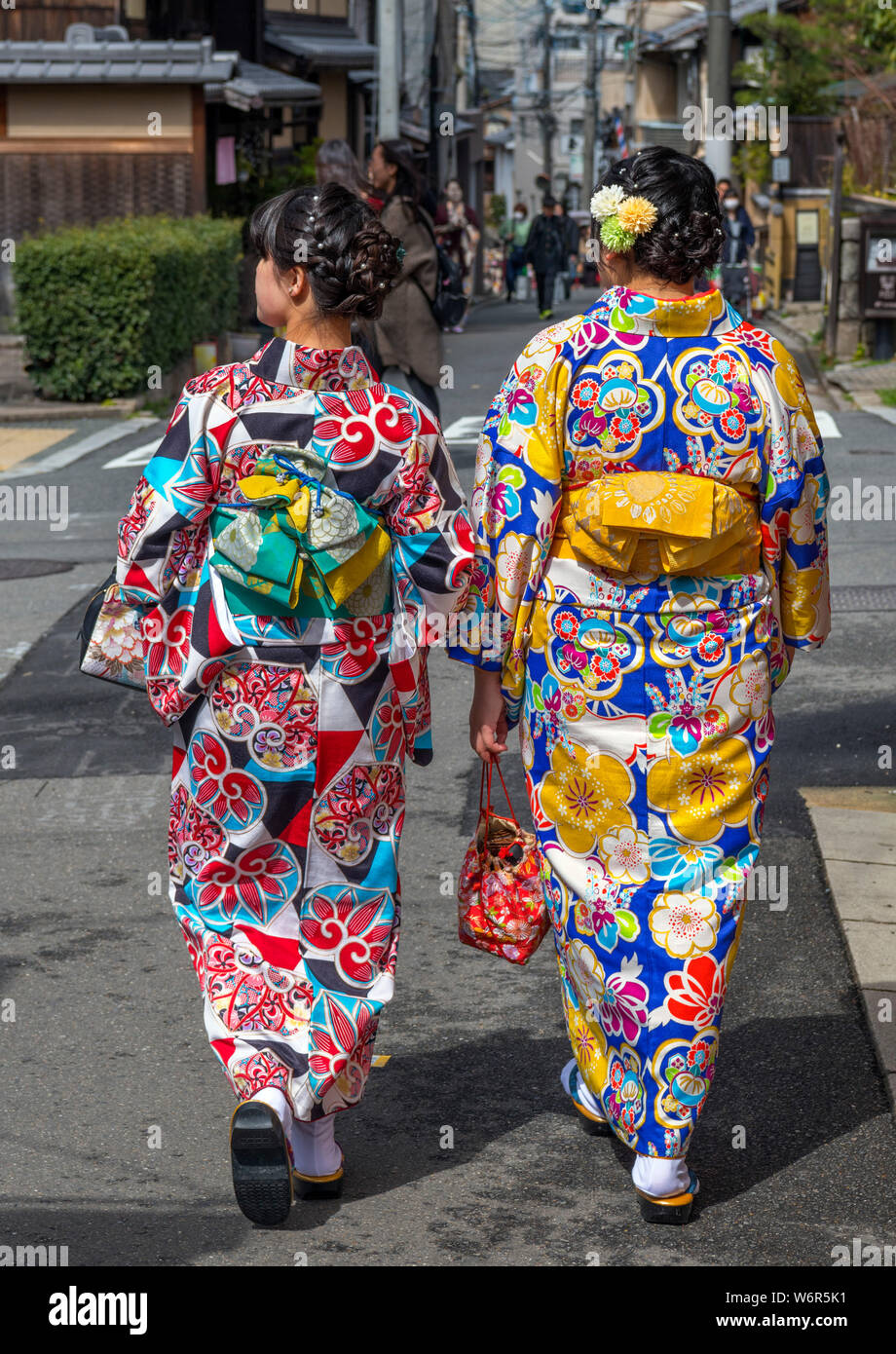
The Edo period (1603–1868) brought a democratization of art through woodblock prints (ukiyo-e). Unlike the exclusive paintings of aristocrats, ukiyo-e were affordable and widely circulated.
- Artists like Kitagawa Utamaro and Utagawa Kuniyoshi captured women in elegant kimonos, actors in kabuki costumes, and samurai in full regalia.
- Kimono styles reflected seasonal trends in Edo (Tokyo) and Kyoto.
- Patterns often became instantly fashionable, much like today's Instagram trends.
- Kabuki theater costumes were bold, influencing urban fashion.
For modern visitors, ukiyo-e prints are not just artworks—they are early "fashion magazines," documenting the ever-evolving kimono culture.
4. Modern Nihonga and Contemporary Expressions
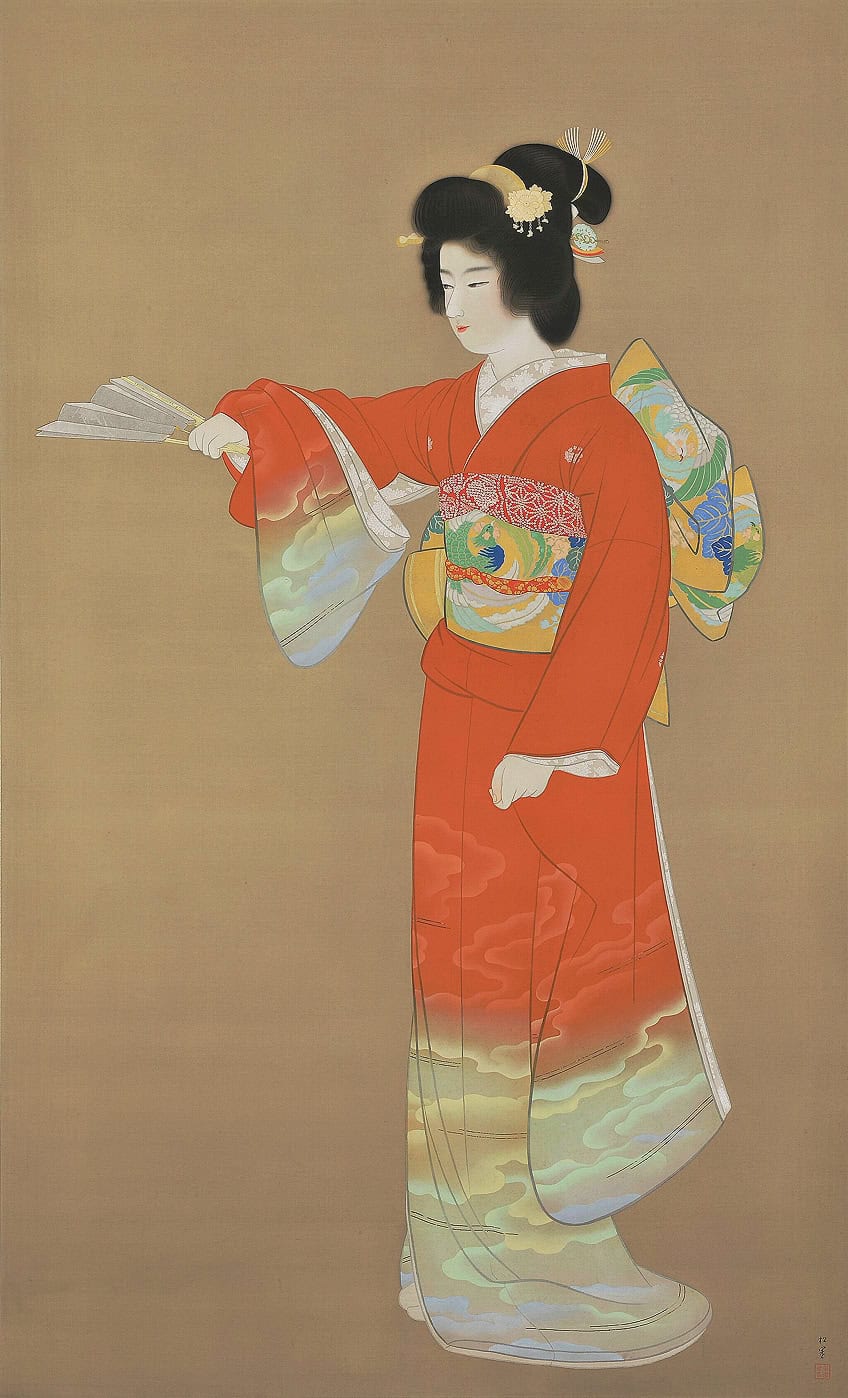
In the late 19th century, Japan faced modernization and Western influence. Artists developed Nihonga, a modern painting style rooted in tradition but open to innovation.
- Kimonos remained central to many Nihonga works.
- Artists like Kōrin and later 20th-century masters painted serene women in refined robes, blending realism with symbolism.
- Even today, contemporary painters and photographers reinterpret the kimono as both nostalgic and avant-garde.
Thus, the kimono continues to live in modern Japanese painting—never frozen in the past, always evolving.
5. Kyoto: The Living Museum of Kimono Culture
Kyoto is not just a city of temples—it is a living canvas where you can step into the paintings of the past. Walking through Gion, Kiyomizu-dera, or Arashiyama in kimono feels like merging art and life.
- The city's historic streets echo ukiyo-e prints.
- Seasonal changes mirror the motifs painted on traditional kimonos.
- Tea houses and shrines still welcome visitors dressed in elegant robes.
📸 To make your experience unforgettable, Mimosa Kimono Rental Kyoto offers carefully curated kimonos, helping you step into the beauty of tradition while exploring the city.

6. Kimono Symbolism: Colors, Patterns, and Seasons
In painting, every detail mattered. The choice of kimono color or motif reflected social messages:
- Red and pink: youth, love, vitality.
- Blue and indigo: calmness, loyalty, purity.
- Gold and white: nobility, elegance.
- Seasonal motifs: cherry blossoms for spring, maple leaves for autumn, cranes for longevity.
Artists understood this symbolic language, and so did the viewers. Wearing a kimono in Kyoto today allows you to embody the same symbolism seen in centuries-old art.
7. Experiencing Kimono in Kyoto Today
Art is not only something to look at—it is something to live. By renting a kimono in Kyoto, you can step into the same cultural flow that artists captured for centuries.
- Walk through Kiyomizu-dera Temple like the noblewomen of old scrolls.
- Pose in Arashiyama Bamboo Grove, echoing modern Nihonga paintings.
- Enjoy a tea ceremony in Gion, wearing a kimono pattern that reflects the season.
👉 Book your kimono experience now at Mimosa Kimono Rental Kyoto.


8. Conclusion: Wearing Art in Everyday Life
The journey of the kimono in Japanese painting shows how clothing is more than fabric—it is identity, culture, and beauty immortalized in art.
From golden folding screens to woodblock prints and modern Nihonga, the kimono has been celebrated as art to be worn and admired. And in Kyoto, you don't just see this tradition—you live it.
Whether you are an art enthusiast, a traveler, or simply someone who wants to immerse in Japanese culture, the kimono is your bridge between past and present.
📌 Kyoto is waiting. Wear art. Live tradition.
Start your journey at Mimosa Kimono Rental Kyoto.
Experience Kimono Culture Today